Gluvy
Gluvy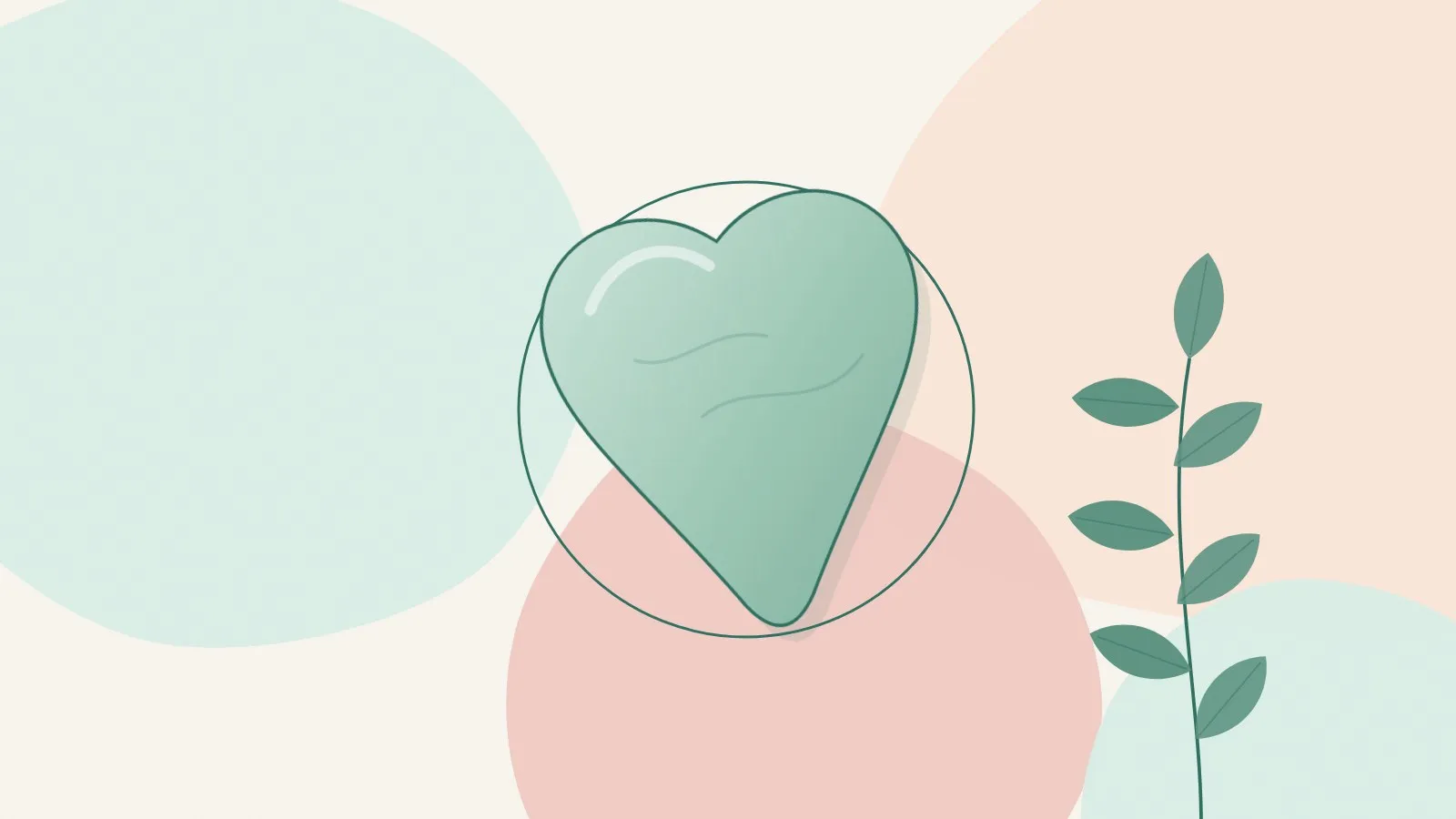
To choose a gua sha stone, start with the shape, not the material: look for a flat tool with one long curved edge, one concave or notched edge and smooth, rounded corners, in a size that feels secure in an oily hand. A heart or wing shape gives you all of that in one piece. Material (jade, rose quartz, stainless steel, ceramic) changes how the tool feels, how cold and heavy it is, how easy it is to clean and what it costs, but not what it does. Below is how each shape and edge is used, how the common materials compare, and what to check before you buy.
The short answer
For most people, the best gua sha is a smooth heart- or wing-shaped tool in whatever material you enjoy holding. If you remember only three things, make them these:
- Pick for edges. A long curved edge for broad areas, a notch for the jawline, a rounded point for the brows and nose.
- Check the finish. A beautiful stone with a rough edge is a worse tool than a plain one with a perfect edge.
- Choose a material for practical reasons. Feel, weight, durability, hygiene and price are real differences. A stone’s “energy” is not.
Gluvy doesn’t sell gua sha tools, so this guide has no favourite brand. For what gua sha is and where it comes from, see our complete guide to gua sha.
Shapes and what each edge is for
Every gua sha shape is just a different arrangement of the same few edges: long and curved, concave, notched, wavy and pointed. Once you know what each edge does, you can judge any tool, even a shape you haven’t seen before.
- Long convex (outward-curving) edge. The workhorse for wide areas: cheeks, forehead and sides of the neck.
- Concave (inward-curving) edge. Wraps around rounded areas such as the jaw and cheekbone.
- Notch. A V- or U-shaped dip. The jawbone or brow bone sits in it so the stone glides along both sides at once.
- Wavy or comb edge. Small ridges some people use on the jaw or scalp; not needed for a basic facial routine.
- Rounded point or small corner. For beside the nose, between the brows and along the brow bone.
Here is how the common shapes line up with the areas of your face:
| Shape | Main edges | Best for | Good first tool? |
|---|---|---|---|
| Heart | Two curved lobes, a notch at the top, a rounded point at the bottom | Jawline (notch), cheeks and neck (lobes), brows and beside the nose (point) | Yes, the most versatile |
| Wing | One long convex edge, one concave edge, often a small notch | Cheeks and forehead (long edge), jaw and neck (concave edge) | Yes |
| S-shape | A convex and a concave curve flowing into each other | Cheekbones, jaw and neck; follows contours closely | Fine once you know the basics |
| Notched or double-notch | Two or more notches of different sizes | Jawline, chin and brow bone | Useful as a second tool |
| Comb | A ridged or toothed edge plus a flat edge | Scalp and jaw; the flat side for cheeks | Not essential |
| Small round or teardrop | Gentle curves, small size | Under-eyes, brows, around the nose | Good for small areas only |
One heart or wing covers a full facial routine. Our step-by-step gua sha routine shows which edge to use for each stroke, from the neck to the forehead.
Got your tool? Learn every stroke with Gluvy’s guided gua sha courses, which show the angle and the edge to use on each area of the face.
Gua sha stone materials compared
The material affects comfort, care and cost, not results. (For a head-to-head, see stainless steel vs jade vs rose quartz.) There is no evidence that one stone works better than another for facial massage, and the research on facial gua sha in general is small and short-term (our article on whether gua sha works goes through the studies). So treat the choice like choosing a mug: pick the one you like holding.
| Material | Feel and temperature | Weight | Durability | Cleaning |
|---|---|---|---|---|
| Jade | Smooth, feels cool at first | Medium | Tough, but can chip or crack if dropped on a hard floor | Mild soap and water; dry fully |
| Rose quartz | Smooth, feels cool at first | Medium | Can chip or crack if dropped | Mild soap and water; dry fully |
| Bian and other natural stones | Varies; often more matte | Medium to heavy | Varies by stone | Mild soap and water; dry fully |
| Stainless steel | Very smooth, feels coldest to the touch | Heavier for its size | Won’t chip or shatter | Non-porous; easiest to keep clean |
| Ceramic | Smooth if glazed | Light to medium | Can chip or break if dropped | Mild soap and water |
| Resin or plastic | Warmer, lighter feel | Light | Can scratch over time | Mild soap and water; check for scratches |
Jade
Jade is the traditional choice and the one most people picture. “Jade” is actually an umbrella term for two different gem materials, jadeite and nephrite, both made of tiny interlocking crystals that make them notably tough (GIA). A jade gua sha stone is smooth and pleasantly cool when you first pick it up, though “jade” on a beauty label doesn’t always mean either mineral (see the quality checks below).
Rose quartz
Rose quartz is the most popular alternative. It feels much like jade in the hand, and its soft pink colour is the main reason many people choose it.
Bian and other stones
Bian stone, amethyst, obsidian and other stones work in the same way as jade. Bian is often sold as a traditional gua sha material and has a darker, more matte look. Choose any of them for feel and appearance, not for special effects on the skin.
Stainless steel
Stainless steel is the practical pick. It doesn’t chip when dropped, is non-porous and easy to keep clean, and travels well. Metal also tends to feel colder than stone at first touch. Some find it heavier and less “natural” in the hand.
Ceramic and resin
Ceramic and resin tools are usually lighter and often cheaper. Glazed ceramic glides well if the glaze is even; resin scratches more easily, so check its edges regularly.
What about temperature?
Any material feels cooler if you chill it. Many people keep their tool in the fridge for a few minutes before a morning session. Skip the freezer and very hot water: sudden temperature changes may stress natural stone, and an icy tool can be uncomfortable on sensitive skin.
Quality checks before you buy
Smooth, undamaged edges are the single most important quality check. Run through this list in a shop or online:
- Edges and surface. All edges should be rounded and polished, with no chips, cracks, pits or sharp corners. In person, run a fingertip along every edge; online, zoom in on photos and check reviews for chips on arrival.
- Edge thickness. A very thin, sharp edge feels like a scraper. A slightly rounded edge is kinder to the face.
- Cracks vs natural lines. Fine natural lines in stone are normal. Cracks you can catch with a fingernail are not.
- Honest labelling. A good seller names the material clearly and answers questions about it.
- Return policy. Chips sometimes happen in transit, so buy from a seller who accepts returns of damaged items.
Real jade, dyed stone and look-alikes
There is no reliable way to confirm real, untreated jade at home. Jade can be bleached, impregnated with polymer resin or dyed to improve its look, and some of these treatments are difficult to detect without a gemological laboratory (GIA). Green glass, resin and other green stones are also sometimes sold as jade.
Some practical, hedged red flags:
- A suspiciously low price for “genuine jade”. If a tool sold as real jade costs about the same as glass or resin tools, be sceptical about the label.
- Colour that looks unnaturally bright or perfectly even. Natural stone usually has some variation. This is a hint, not proof.
- Vague descriptions such as “jade stone” with no mention of the mineral, or sellers who can’t answer questions about it.
- Very light weight. Glass and resin can feel lighter than stone of the same size, although this is hard to judge without a comparison.
The good news: for gua sha, it barely matters. A smooth, well-polished tool that isn’t jade glides just as well as one that is.
Size and grip
Choose a tool that sits securely in your hand when your fingers are oily. Facial gua sha uses oil or a slippy serum, so grip matters more than you might expect.
- Hand size. Small hands find a smaller heart or wing easier to hold at the low angle (about 15 to 45 degrees) gentle strokes need. Large hands may find tiny stones fiddly.
- Thickness. A slightly thicker tool is easier to grip. Very thin stones can feel sharp and break more easily.
- Weight. A heavier tool does some of the work on the cheeks and neck; a lighter one is easier to control around the eyes and brows.
If you can, hold the tool almost flat against the back of your hand and glide it. If it feels comfortable and stable there, it will likely feel good on your face.
Caring for your tool
Clean your gua sha after every use, dry it fully and store it where it can’t fall. Good care keeps it hygienic and stops chips that would make it unsafe to use.
- Clean. Wash with warm (not hot) water and a mild soap, then rinse. Oil builds up quickly.
- Dry. Pat dry with a clean, soft cloth before you put it away.
- Store. Keep it in a pouch or drawer, away from the edge of the sink and hard floors.
- Inspect. Every week or so, run your finger along each edge. Replace a tool with chips or cracks rather than trying to sand it smooth at home.
- Keep it personal. Don’t share your tool, and don’t use it over active breakouts, cold sores, cuts or irritated skin.
For a broader look at who should skip gua sha or check with a doctor first, see the safety section of our complete guide to gua sha.
Ignore these claims
Crystal “energy”, detox and promises of a reshaped face are marketing, not evidence. Here is how to read common shopping-page claims:
- “This stone balances your energy” or “has healing properties”. There is no evidence that the type of stone changes what gua sha does.
- “Detoxifies your skin” or “flushes toxins”. Facial gua sha is gentle massage. It may help your face feel relaxed and, for some people, look less puffy for a while, but it doesn’t remove toxins.
- “Lifts and sculpts your face”. No tool can promise a lasting change to the shape of your face, and no study shows that a particular material matters.
- “Better results with a more expensive stone”. Price reflects material and brand, not the massage.
If you want to compare gua sha with other tools, our guide to gua sha vs jade roller explains how the two differ and when a roller is the simpler pick.
Learn to use your stone with Gluvy
Once you’ve chosen a tool, technique matters more than the stone. In the Gluvy app, the “Guasha Introduction” article course includes a lesson on how to choose a gua sha stone, followed by basic gua sha techniques, a face routine and tips and precautions. From there you can move to Gluvy’s gua sha video courses: about 34 guided gua sha and facial-massage routines, from jawline, cheek and brow strokes to neck and morning de-puffing routines, each with a timer for every step. Gluvy is an iPhone app, and you can download Gluvy for free.
Sources
Frequently asked questions
Which gua sha shape is best for beginners?
A heart or wing shape with a notch is the easiest place to start. Its long curved edge covers the cheeks, neck and forehead, its notch fits along the jawline, and its rounded corners work around the brows. One tool like this covers a full facial routine.
Is jade or rose quartz better for gua sha?
Functionally they are very similar: both are smooth, cool-feeling stones that glide well over oiled skin. The differences are in weight, colour, price and how they handle a fall. Pick the one you like holding and will use regularly; there is no evidence that one gives better results than the other.
How do I know if my jade gua sha is real?
You can't be certain without testing by a gem laboratory, because dyed, treated and look-alike stones can be hard to tell apart by eye. Practical red flags include a very low price for 'genuine jade', colour that looks unnaturally even or bright, and a seller who can't say which stone it is. For a facial tool, smooth edges matter far more than whether the stone is jade.
Can a chipped gua sha hurt my skin?
Yes. A chip, crack or rough spot can scratch or irritate the skin as you glide, and cracks can hold oil and dirt. Run your finger along every edge regularly, and replace the tool if you find damage rather than trying to file it smooth.
How do I clean my gua sha?
Wash it after every use with warm water and a mild soap, rinse well and dry it fully with a soft, clean cloth. Avoid soaking natural stone for long periods or using harsh cleaners, and don't share your tool with anyone else.

Practise this with Gluvy. Follow-along videos with a timer for every step. See Gluvy's gua sha video courses.
Download on theApp Store
The team that builds Gluvy writes these guides from the app's own face yoga, gua sha and skincare courses. We are not doctors or dermatologists: articles are general wellness information, and we link to the research where it exists.
This article is general wellness information, not medical advice. Talk to a doctor or dermatologist if you have a skin, jaw or other medical condition.